
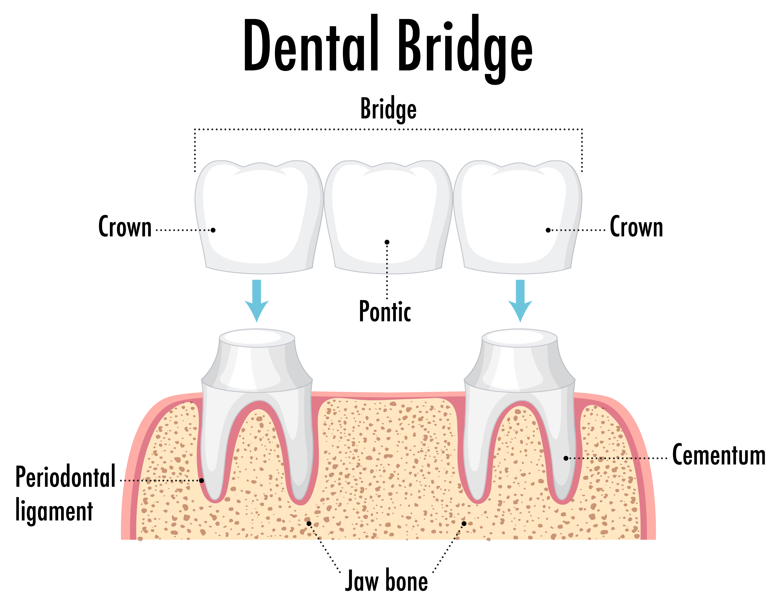
Dental crowns and bridges are common ways to restore damaged or missing teeth. Many people wonder which option is best for their smile. Understanding the difference between dental crowns and bridges can help you make the right choice. Both treatments improve how your teeth look and work. However, they serve different purposes. In this blog, you will learn what dental crowns and bridges are, when you might need each one, and how to care for them. This information can help you feel confident about your dental health.
What Are Dental Crowns?
Dental crowns are tooth-shaped caps. Dentists place them over a damaged or weak tooth. Crowns help protect, cover, and restore the shape of your tooth. They look and feel like natural teeth. Often, crowns are made from porcelain, ceramic, or metal. For example, if you have a cracked or worn-down tooth, a crown can make it strong again. According to the American Dental Association, crowns are a safe and effective dental procedure.
What Are Dental Bridges?
Dental bridges fill the gap left by one or more missing teeth. A bridge uses the teeth on either side of the gap as support. The dentist places crowns on these support teeth, then attaches a false tooth (or teeth) between them. As a result, bridges help restore your smile and make chewing easier. There are different types of bridges, but all aim to replace missing teeth and keep your bite even.
When Do You Need a Crown vs. a Bridge?
Choosing between a crown and a bridge depends on your dental needs. Here are some common reasons for each:
Sometimes, your dentist may recommend both. For instance, a bridge often uses crowns on nearby teeth for support.
Benefits and Drawbacks of Crowns and Bridges
Both crowns and bridges offer many benefits. However, each has some drawbacks to consider. Let’s look at both:
Even though both options work well, your dentist will help you decide which is best for your situation.
How Are Crowns and Bridges Placed?
The process for crowns and bridges is similar. First, your dentist will examine your mouth and take X-rays. Next, they will shape the tooth or teeth to fit the crown or bridge. Then, they take a mold or digital scan. While you wait for the final crown or bridge, you may get a temporary one. Once the permanent piece is ready, your dentist will check the fit and color. Finally, they cement it in place. Most people need two visits for the full procedure.
Care and Maintenance Tips
Proper care helps crowns and bridges last longer. Here are some easy tips:
With good care, crowns and bridges can last many years.
Prevention and Oral Health Guidance
Preventing dental problems is always better than fixing them. Therefore, keep your teeth healthy by following these steps:
By taking these steps, you can lower your risk of needing crowns or bridges in the future.
In summary, dental crowns and bridges are both helpful for restoring your smile. However, the right choice depends on your needs. Consult Dr. Shilpa Reddy to determine whether a crown or bridge is right for your dental needs.