
Introduction
Many people want a straighter smile. Today, you have more orthodontic options than ever before. Braces and aligners are two popular choices. In this blog, we will compare braces vs aligners. We will help you understand how each works, their pros and cons, and which may fit your needs best.
What Are Braces?
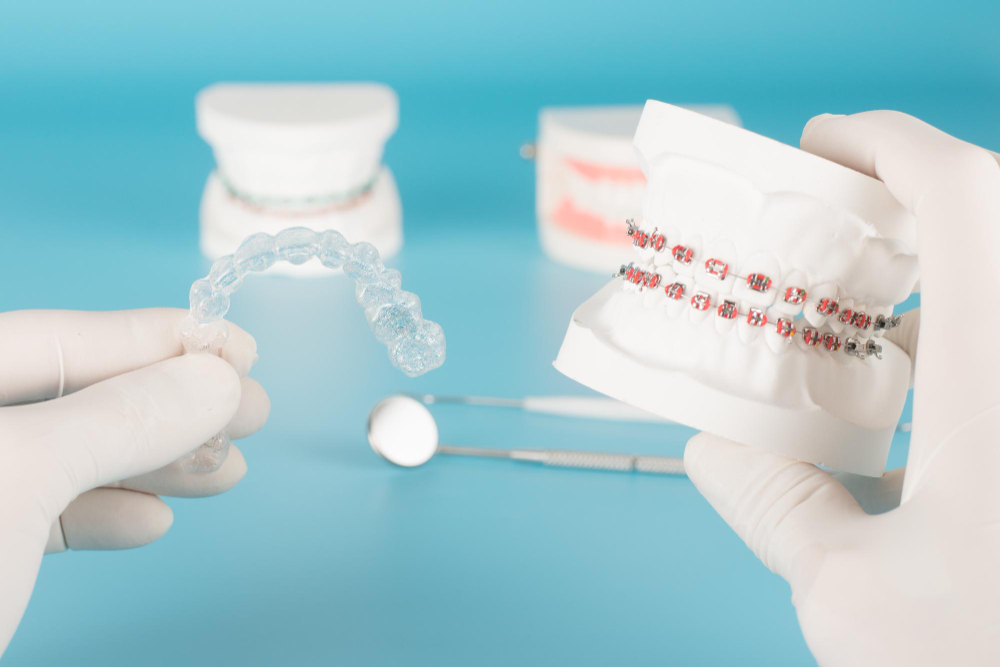
Braces are devices that straighten teeth using brackets and wires. Dentists attach brackets to your teeth and connect them with a thin wire. Over time, the wire gently moves your teeth into the right position. There are several types of braces:
Braces are effective for many dental problems, including crowded teeth, gaps, and bite issues. According to the American Association of Orthodontists, braces have been used safely for decades.
What Are Aligners?
Aligners are clear, removable trays that fit over your teeth. They gently move your teeth into place. You wear each set of aligners for about two weeks before switching to the next set. Popular brands include Invisalign and ClearCorrect. Aligners are almost invisible, so many people like their discreet look. You can remove them to eat, brush, and floss.
Key Differences: Braces vs Aligners
Pros and Cons
Braces
Aligners
Suitability: Who Should Consider Braces vs Aligners?
Choosing between braces and aligners depends on your needs. For example, children and teens with complex dental issues often need braces. Adults with mild to moderate problems may prefer aligners. Consider these factors:
Treatment Process
Braces
Aligners
Results and Expectations
Both braces and aligners can give you a straight smile. However, treatment time varies. Braces often take 18-24 months. Aligners may work faster for simple cases, sometimes in 6-18 months. Results depend on your dental needs and how well you follow your treatment plan. According to the CDC, good oral care during treatment helps ensure the best results.
Prevention and Care
Keeping your teeth clean is very important during orthodontic treatment. For braces, brush and floss carefully around brackets and wires. Use a special brush if needed. For aligners, remove them before eating or drinking anything but water. Clean your aligners daily. In both cases, visit your dentist for regular check-ups. Eat a healthy diet and avoid sticky or hard foods that can damage your braces or teeth.
Conclusion
In summary, both braces and aligners are effective orthodontic options. Braces are best for complex dental issues and for those who may forget to wear aligners. Aligners are a good choice for mild to moderate problems and for people who want a nearly invisible option. Think about your needs, lifestyle, and dental health. Consult Dr.Shilpa Reddy to discuss the best option for your smile.