
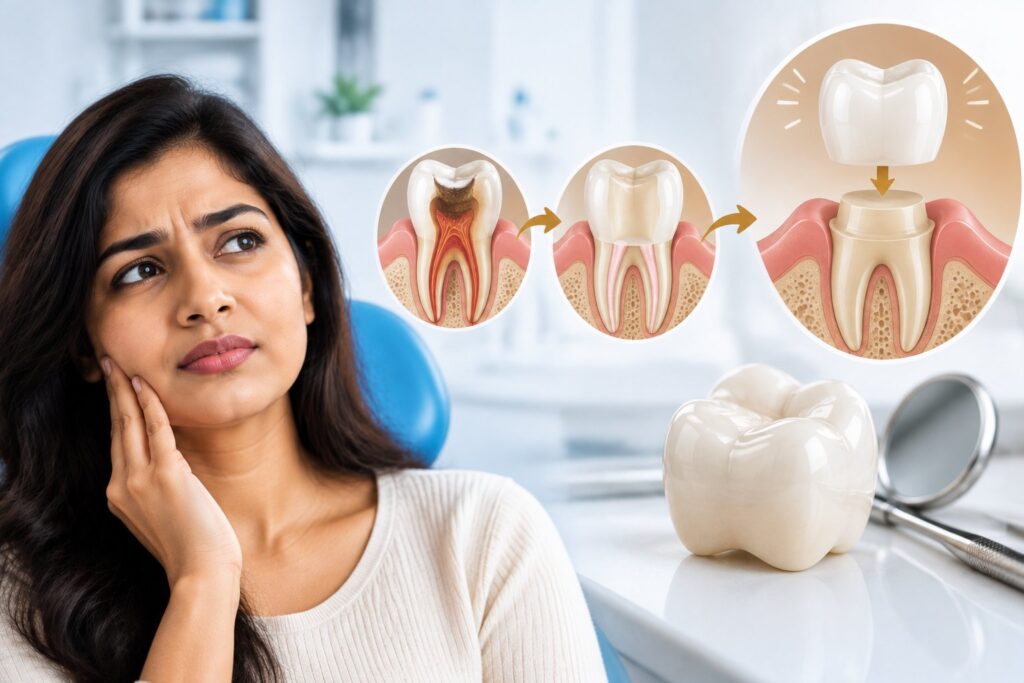
Many people wonder, “Why does a root canal-treated tooth need a crown?” This is a common question after root canal treatment. Understanding the need for a crown can help you protect your tooth and keep your smile healthy. In this blog, we will explain why a dental crown is often necessary after a root canal. We will also discuss the benefits, risks, and answer some frequently asked questions.
What is a Root Canal Treatment?
First, let’s explain what a root canal treatment is. A root canal is a dental procedure that removes infected or damaged tissue from inside your tooth. This tissue is called the pulp. The dentist cleans the inside of the tooth and fills it to prevent further infection. According to the American Dental Association (ADA), root canal treatment helps save your natural tooth instead of removing it.
What Happens to a Tooth After a Root Canal?
After a root canal, your tooth is no longer alive because the pulp has been removed. However, the tooth can still function for biting and chewing. Even so, the tooth becomes weaker and more likely to break over time. In addition, the tooth may become dry and brittle. This is why extra protection is often needed.
Why is a Crown Needed After a Root Canal?
There are several reasons why a crown is needed after a root canal. Most importantly, a crown covers and protects the tooth. Here are some key reasons:
Therefore, placing a crown is a common step after root canal treatment. Dentists often recommend it, especially for back teeth that do most of the chewing.
Benefits of Placing a Crown on a Root Canal-Treated Tooth
Placing a crown after a root canal offers many benefits. For example, it helps you chew food comfortably. In addition, it keeps your tooth safe for many years. Here are some main benefits:
According to dental experts, crowns are a key part of protecting teeth after root canal treatment.
Risks of Not Placing a Crown
However, if you do not place a crown after a root canal, there are some risks. The tooth may break, which can lead to pain or even tooth loss. In some cases, the tooth may need to be removed if it cannot be fixed. Additionally, the tooth is more likely to get infected again. Therefore, not getting a crown can put your dental health at risk.
Frequently Asked Questions (FAQs)
In summary, a root canal-treated tooth needs a crown for strength, protection, and long-term health. For more information, you can visit trusted sources like the ADA or the World Health Organization.
Consult Dr. Shilpa Reddy to determine if a crown is right for your root canal-treated tooth.